The Ealing Beaver Project – One Year In
October 11 marked the one-year anniversary of the Ealing Beaver Project releasing a family of five beavers to Paradise Fields, in urban London. Many of you have seen the amazing photos and videos posted to our Facebook and Instagram accounts, taken part in volunteer activities on-site, joined a beaver tour or just explored the site on your own. If you are lucky, you may even have seen one of the beavers in the flesh. The Ealing Beaver Project now has a beautiful website where you can explore videos and the whirlwind of media coverage received, as well as keeping up to date on events. Now one year in, this is a quick update on how things are going.
How it started
It took 3 years from the idea’s inception to putting beavers on the ground. Partnerships were formed behind the idea to make this dream a reality; Ealing Wildlife Group, Citizen Zoo, Friends of Horsenden, and Ealing Council became project partners with the support of The Beaver Trust and later additional funding from the London Rewilding Fund from the Mayor of London.
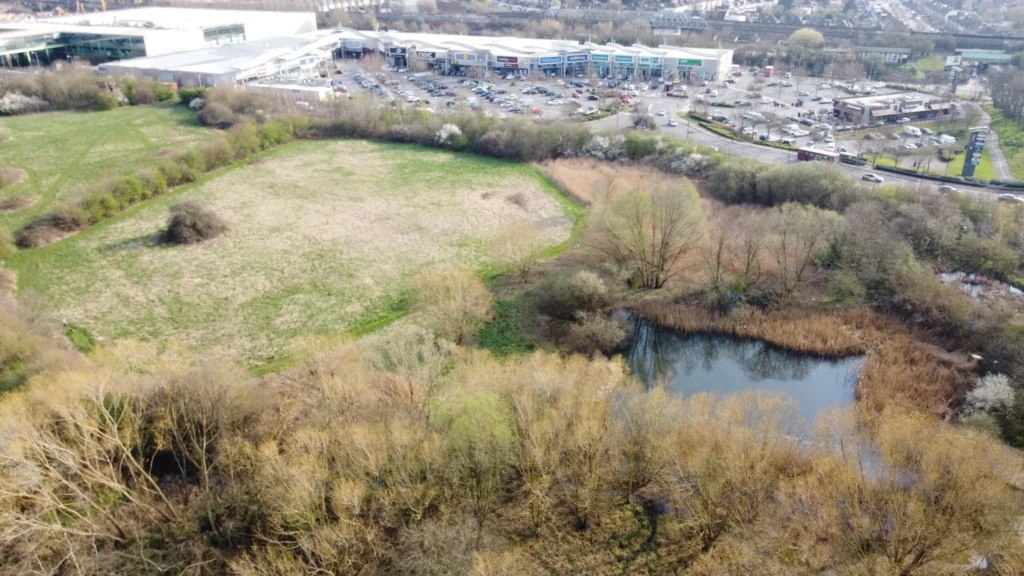
Paradise Fields was selected from ten other candidate sites in London; a suitability study of the site was conducted, the local community was consulted in a public consultation, and the licence had to be drafted by Natural England.
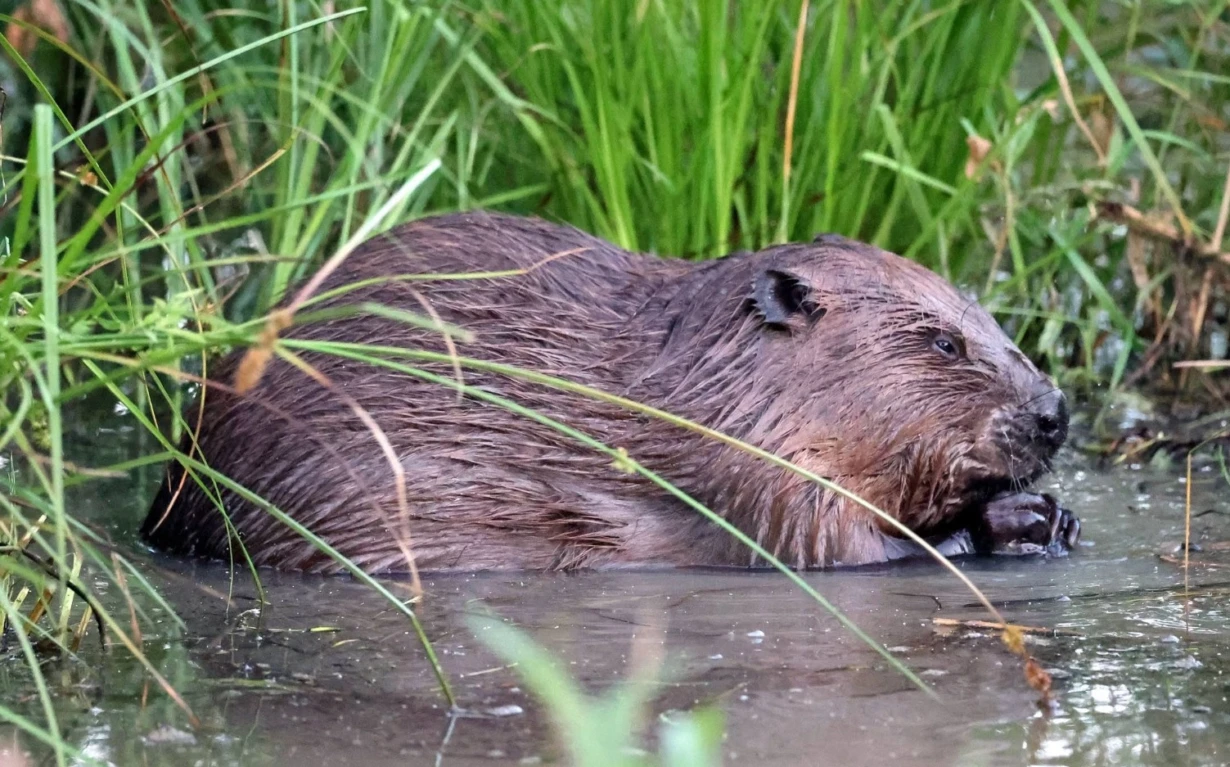
(Photo credit: James Morton)
Once Natural England granted the licence in February 2023, there was a frenzy to prepare Paradise Fields for the incoming beaver family. A 1.2 km beaver-proof fence had to be constructed to comply with the licence. Over one hundred volunteers helped clear vegetation for the installation of the fence, remove historic litter, and record biodiversity for baseline assessments.
(Photo credit: Caroline Farrow)
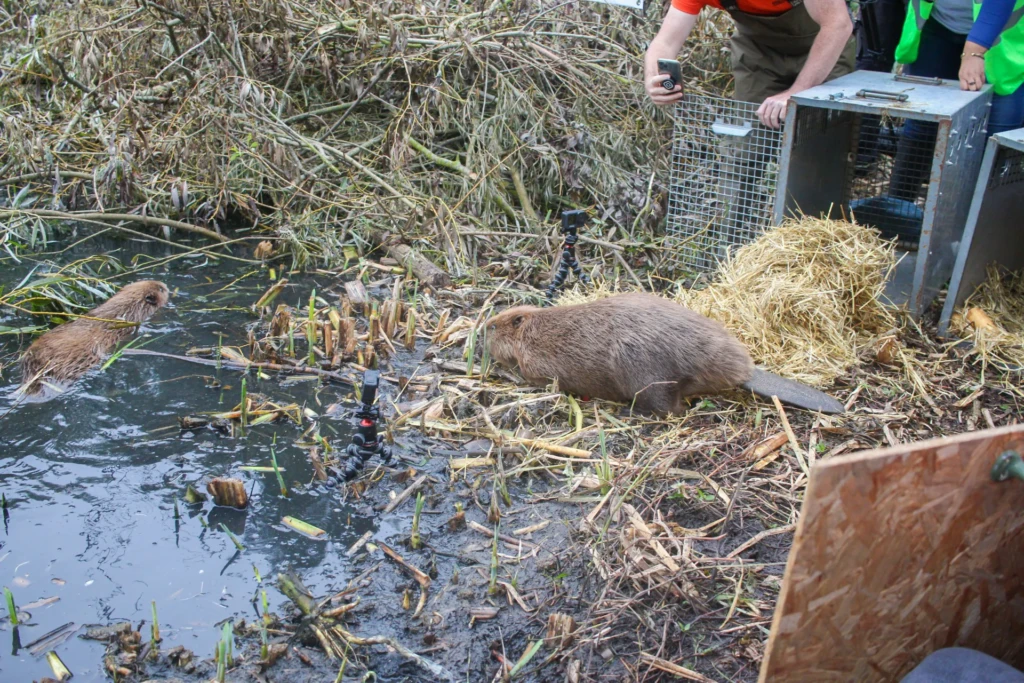
On release day, the beavers arrived in crates that were lined up next to the water line so that they could quickly access the safety of the main pond. There was a substantial presence of press and other stakeholders (kept in strict order by our marshals). However, once the beavers were out of their crates they took their time entering the water and then cruised around in the open water for some time as they explored their new home. Some of them even came back up onto the banks after their initial swim despite the presence of people. It just goes to show the rewards you can experience if you give nature a bit of respectful quiet and space. Check out highlights from the release on the Ealing Beaver Project website.
The site was closed to the public for a month after the release to allow the beavers to settle in their new space in peace, with only essential on-site welfare checks. Coming from rural Scotland to urban Greenford must have been quite a change for the beavers. In the early camera footage, you can see them pausing their activity for unusual noises (alarms, sirens, fireworks etc…) but they quickly resumed their feeding, and they now seem to have accepted all of this as an unthreatening part of their life, not even flinching at the sound of sirens on trail camera footage.
Once the site reopened, some of our volunteers started to encounter the beavers as they went about their work. These meetings often resulted in the beaver slapping its tail against the water as it disappeared – something they do to alert other beavers of a potential threat. As time went on, this behaviour became less and less frequent and is now very unlikely unless you make a sudden movement or noise that startles them. So, the beavers are settling in very well and they are starting to work their magic on the site.
How it's going
(Photo credit: Sean McCormack)
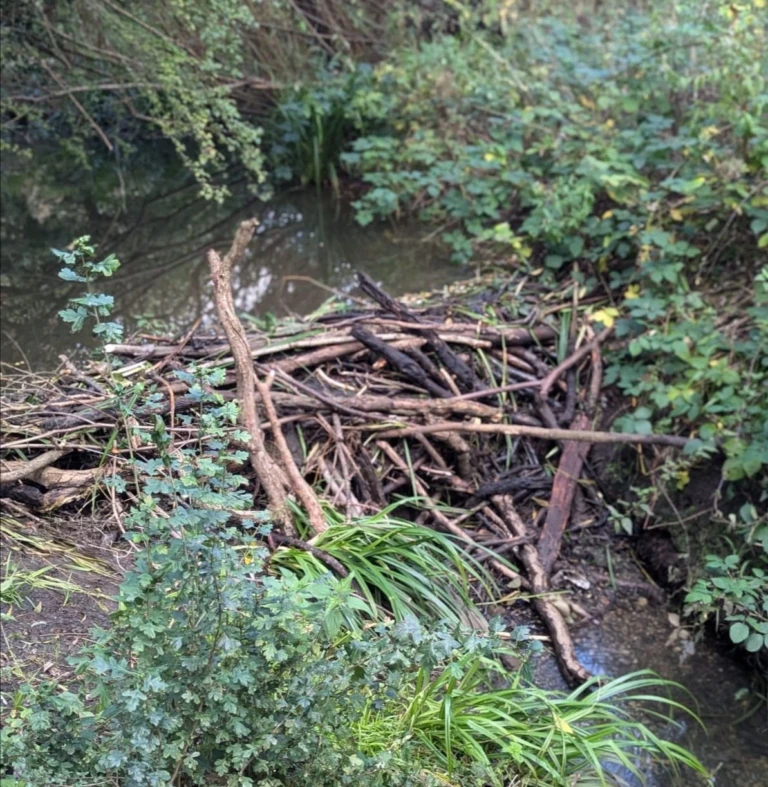
Over the past year the beavers have constructed two lodges (these are the places they will sleep and raise their kits) and at least seven dams (to create deeper and wider water bodies that they can use to control water levels and as safe retreats). A lot of this work is hidden away amongst the tree cover in Paradise Fields, but you can see one of their dams from the Capital Ring, just where the Costons Brook crosses underneath.
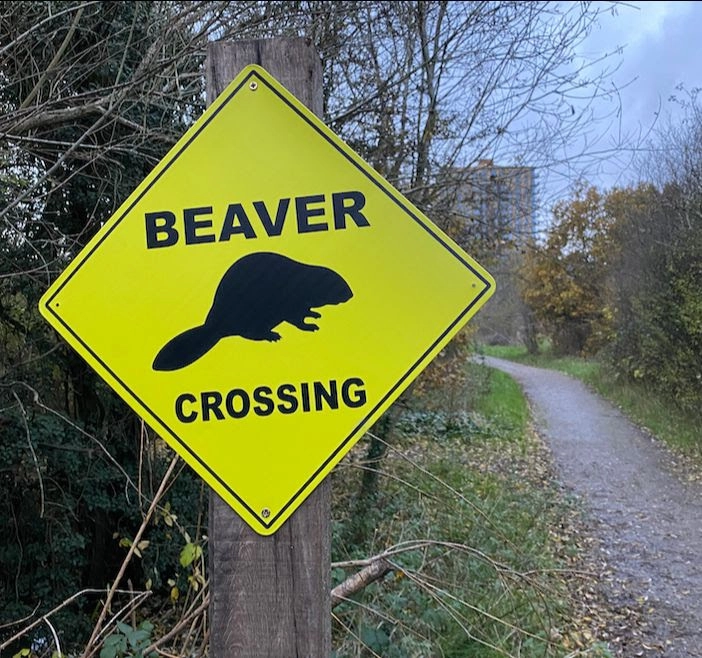
There is a handy beaver sign on that side of the path to show you which side it’s on, and you can see that the water is much deeper and wider there. It seems the beavers are using this junction to cross the Capital Ring path, and the pool behind that dam provides a deep water refuge to escape to if they are disturbed whilst crossing the path. Although beavers are mainly nocturnal animals, they have been spotted by this dam, even during the day.
(Photo credit: Sean McCormack)
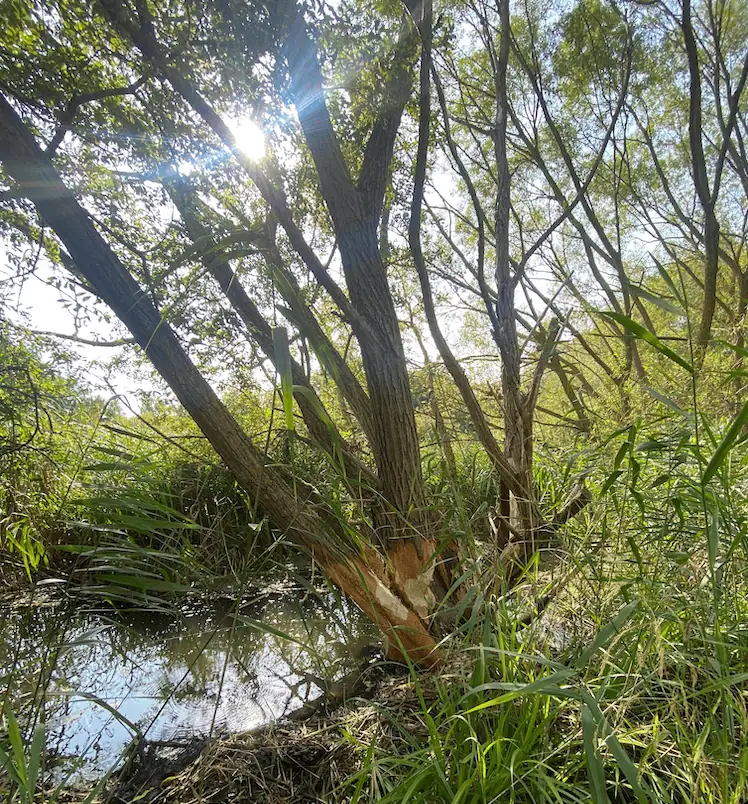
In the main pond, they have started digging out into the bank where they were released, increasing the water area, possibly to let them get closer to a large willow tree without having to stray too far from the water. These shallow water areas are really useful for all sorts of wildlife as areas to drink and bathe and are ideal spots for frogs and newts to lay their eggs, as they warm up quickly in the spring sunshine. Before the beaver release, there were no amphibians breeding, but both Smooth Newts (Lissotriton vulgaris) and Common Frog (Rana temporaria) were found on site and we hope the beavers’ wetland enhancements provide more opportunities for amphibians.
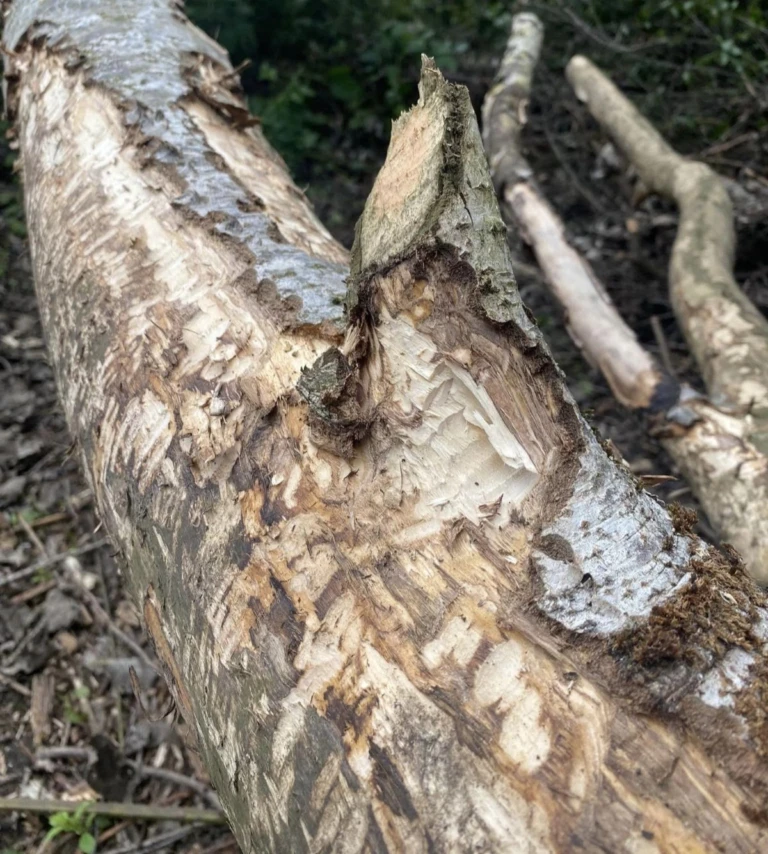
Away from the pond, the beavers have been busy harvesting trees. Their chisel-like teeth (coloured orange by the iron contained within, which gives them their strength) are well adapted to bringing down trees to feed on the bark and leaves, and also to use in dam and lodge construction. The Paradise Fields site has very dense tree cover in places, as well as a great deal of scrub. Although these are both important wildlife habitats, left unmanaged a few species will push out the others, and the ecosystem can lose its diversity. Beavers’ tree-felling and wetland management are an important part of a natural dynamic process that keeps dominant species in check, creates a myriad of micro-habitats, and boosts biodiversity. Beavers are sometimes called a biodiversity magic pill; where beavers are re-introduced, often enormous biodiversity benefits follow.
(Photo credit: Sean McCormack)
As they bring down trees on the site, they naturally let in light allowing dormant seeds to germinate. The decomposing tree provides a habitat for all sorts of wood-consuming invertebrates (called saproxylic species), which will attract larger predators. As the plants from the seed bank grow, they will also provide a new food resource with their leaves, flowers and seeds, and the gap in the woodland canopy will create sheltered sunny areas that many insects favour as basking sites. We are keeping an eye on how these habitats change and the different species which may turn up.
Our beavers have been enjoying the plentiful willow and sallow trees on site, which are amongst their favourite food plants, but they haven’t confined themselves to these. One of the more unusual behaviours noticed has been that at least one beaver has developed a taste for Blackthorn (Prunus spinosa). This is not a typical foodplant for beavers, with one analysis of the diet of beavers in Saxony describing it as ‘very unpopular’ and a paper in the Oxford Academic stating that the leaves would only occasionally be eaten. Have our beavers developed very exotic tastes? Or have they just not read the scientific literature? One thing is for sure, they haven’t run out of willow to eat so it isn’t lack of choice.
Regardless of the reason, it’s good news for the site. Blackthorn is adept at spreading out into grasslands and forming monocultural blocks – it can take quite some effort to manage this and prevent it from taking over a site completely. By harvesting the shrubs, the beavers should keep this plant in check, allowing the paths and grasslands some breathing space.
(Photo credit: Alex Worsey)
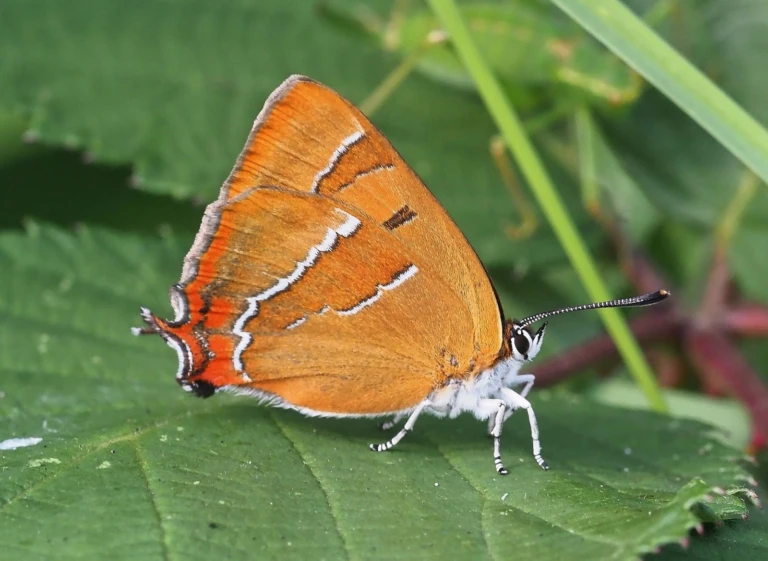
The Blackthorn itself will easily survive this harvesting and will send up lots of fresh young suckers from its roots. This is great news for our population of rare Brown Hairstreak butterflies (Thecla betulae) which lay their eggs on young Blackthorn growth. Volunteers with the Ealing Beaver Project and Ealing Wildlife Group are monitoring their breeding on the site and it will be interesting to see how they make use of all this new growth during our winter egg hunt.
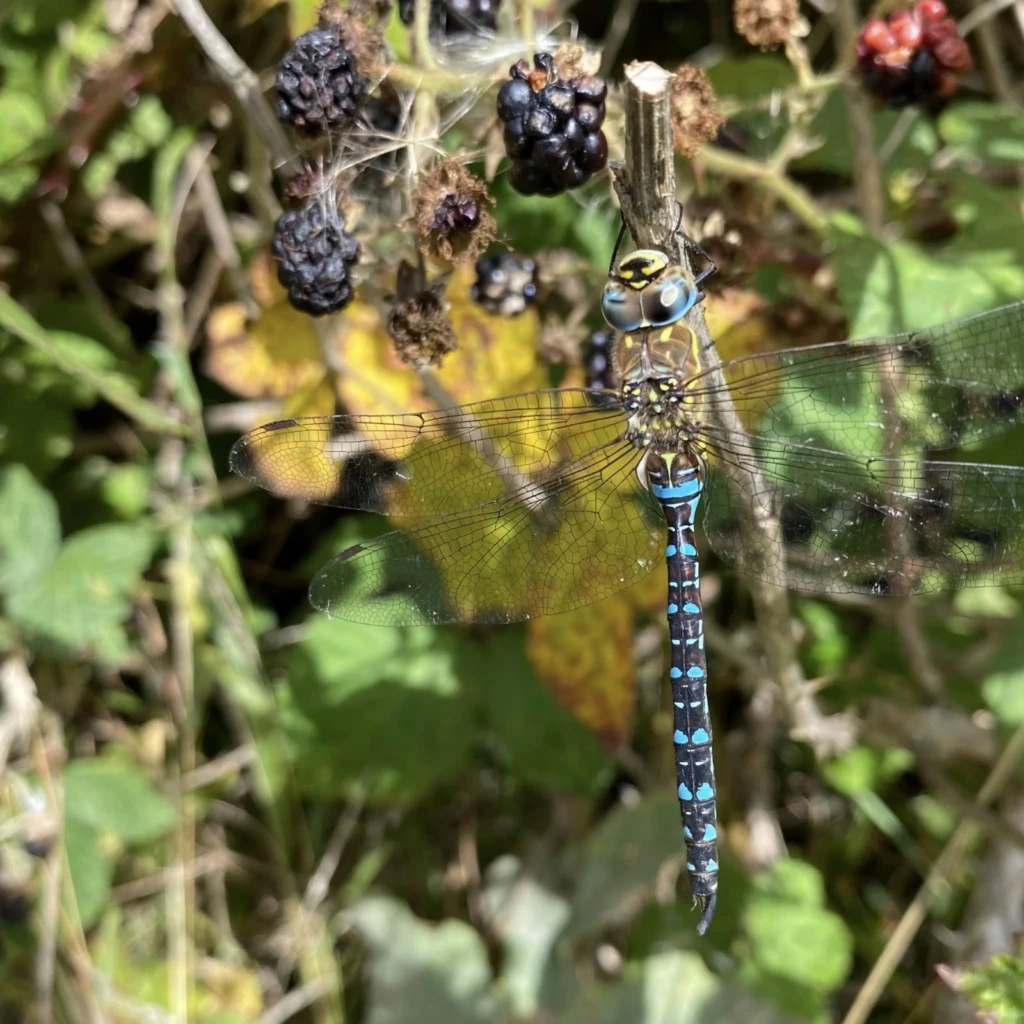
During the summer months, beavers will eat a host of softer plants – softer than trees that is! We have seen the beavers eating nettles and they are also known to eat brambles. They clearly have tough palates. Much like the Blackthorn, this should be good news for biodiversity on site. These plants can be very dominant, especially in the high-nutrient habitats often found around water bodies. It is early days, but if the beavers preferentially consume these plants, it should create space for a greater diversity of plant species to start growing.
One final surprise the beavers had in store for us – one willow tree that they felled didn’t fall flat to the ground, creating a slope that at least one intrepid beaver climbed up to reach a tasty-looking branch, several feet off the ground! Who knew that beavers could climb trees!?
Cleaner water, expanding wetlands
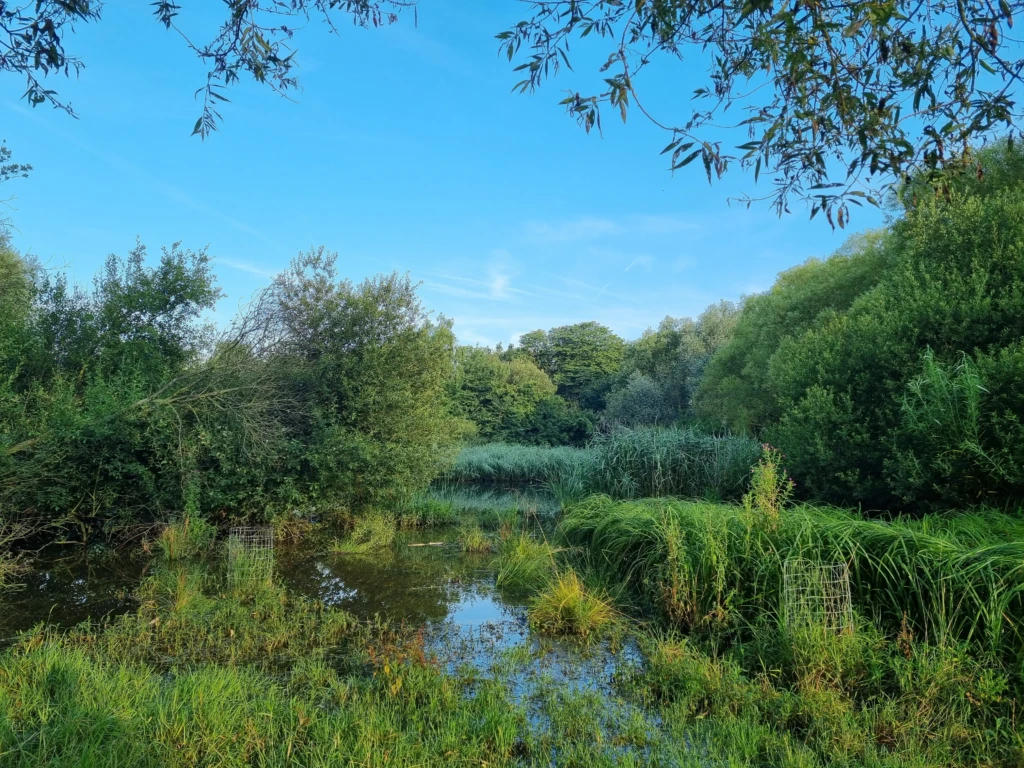
It’s fair to say that when it comes to water quality, Paradise Fields was not living up to its name. A crew from Zoological Society London along with our volunteers came in to assess the quality of the main water bodies on the site prior to the release day and the results were poor. With a maximum score of 10 (for the highest ecological quality), the main pond scored 3.88 and Costons Brook managed an even feebler zero! We were hopeful that once the beavers got to work, the quality of the water on site would improve and they were certainly given a low bar to work from. Beavers will improve water quality in a number of ways.
(Photo credit: Fiona McIntyre)
Their dams help to filter out pollutants and sediments from the water, allowing light to penetrate deeper into the water and reducing the nutrient load. This allows more complex plant life to establish and reduces the likelihood of boom-and-bust algal cycles. With greater plant diversity, oxygen levels are more stable and there is a greater variety of microhabitats and food sources for animals to rely on. The dams become a source of aquatic fresh wood, providing another microhabitat for invertebrates, amphibians, and fish.
In addition, as the beavers bring down trees around the water’s edge, they allow more light into the water, reducing the amount of leaf litter that ends up in the water body (which can silt up the pond and consume oxygen as it decomposes) and creating an open bank habitat for a greater diversity of smaller plants. In fact, we are seeing more sensitive aquatic plants grow in Costons Brook and around the main lagoon than before the beavers arrived.
Beavers also deepen water bodies and create new, shallow channels into the surrounding areas. Both of these create new habitats; deeper areas have cooler water that can provide refuges during drought or a heavy freeze, whilst the shallower areas will warm up quickly in spring, allowing animals emerging from hibernation to get a head start and providing a refuge from larger aquatic predators.
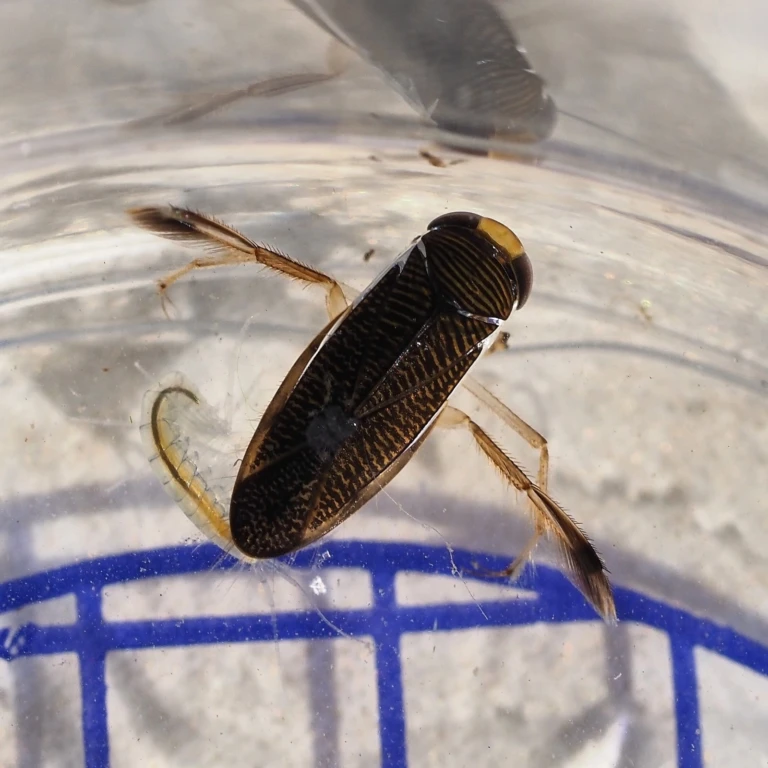
We are continuing to monitor the water quality at several areas throughout the site and there is a clear decrease in nutrients and pollutants as you move downstream through the beaver dams. As water quality improves, water-quality sensitive species start to return. We have seen swarms of Daphnia, unlike in previous years, that are part of the lower aquatic food chain. Aquatic invertebrate surveys show increases in the populations of freshwater shrimp, diving beetles and water scorpions (Nepa cineria).
(Photo credit: Alex Worsey)
(Photo credit: Victoria Williams)
Bats and Swifts (Apus apus) are both doing well on site and can be seen hawking over the main pond together in the evenings – a sure sign that there is abundant insect life above the water. Other sensitive birds are also frequenting Paradise Fields more often now, including the Kingfisher (Alcedo athis) and the elusive Water Rail (Rallus aquaticus). From on-site static bat detectors and visual recordings, we have detected Daubenton’s Bat (Myotis daubentonii), sometimes referred to as the water bat, hunting insects over the main lagoon; a phenomenon that we did not record the previous year. The Daubenton’s Bat needs wide open water bodies with many emerging insects over which to hunt. The beaver’s activities seemed to have transformed the main lagoon from a near ecological dead zone, to a wetland refugium in a year that has seen overall severe insect decline.
The beavers have continued to surprise everyone throughout this year, especially by how busy they are. Their industrious nature has led to many physical changes on site, like the sheer number of dams, but we are also surprised at how quickly the biodiversity responded to these changes. We are thrilled at how quickly the beavers settled into their new home.
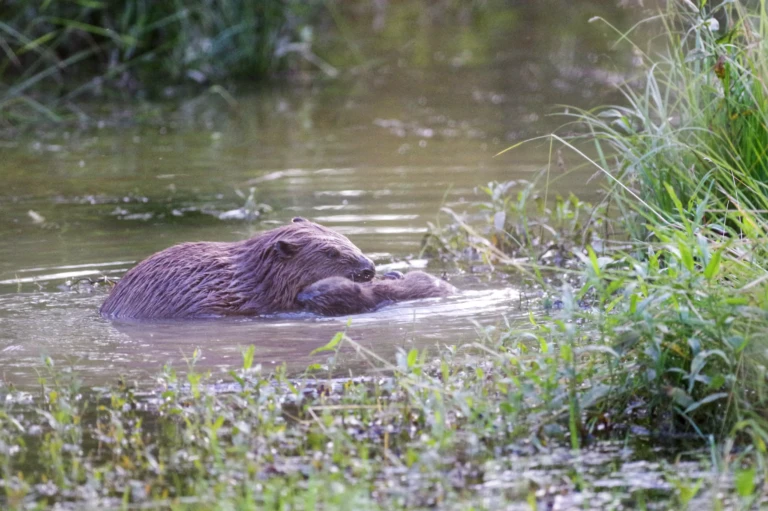
The biggest testament to their happiness is that they felt comfortable and resourced enough to have at least two new kits within their first year at Paradise Fields. Check out some adorable footage of the kits on the EBP website.
(Photo credit: Nichola Nichols)
What's next?
Producer Matt Brierly’s documentary ‘Beavers in Paradise’ recently received a Gabriel Figueroa Special Award from the Wildlife Conservation Film Festival in 2024. You can watch the film in upcoming theatre showings (events on EventBrite) and on the EBP website.
We still have a few years left to go with our licence from Natural England, so no doubt there will be plenty more discoveries in the years to come. We’re expecting both the water quality and biodiversity to continue to increase on the site. We are particularly monitoring amphibians, birds, bats and aquatic invertebrates, but we are keen to understand as many changes on site as we can, so if you are in Paradise Fields and you see any wildlife, please do consider posting it on iNaturalist so we can pick up the records.
(Photo credit: Cathy Gilman)
It’s never possible to be completely certain of what will happen with nature, but our top predictions would be frogs starting to breed on site, an increase in evidence of newts breeding, additional bat species appearing and an increase in the diversity of aquatic invertebrates. Regardless of what happens, ensuring our beavers continue to thrive will be the number one priority and we hope you will all continue to enjoy them and support the project!